
Precast doesn’t just work on clean, straight runs. Mixed conduit sizes, frequent grade changes, tight utility corridors, hard offsets — DBO builds around your geometry, not a standard catalog. Here’s how each condition works in the field.
When to Use Precast. When to Pour.
The fastest duct bank jobs mix both methods deliberately:
| Condition | Best Method |
|---|---|
| Straight runs, any conduit config | Precast |
| Elevation changes 4’ over 50’ or 8% | Precast |
| Crowded utility corridors | Precast |
| Hard offsets and exact-coordinate tie-ins | Cast-in-place transition |
| Sharp grade breaks | Cast-in-place |
| Corner bends (22°, 45°, 90°) | Cast-in-place stub-in |
A precast crew running continuously, with a two-person cast crew handling transitions behind them — that’s where the efficiency is.
Mixed Conduit Sizes in One Section
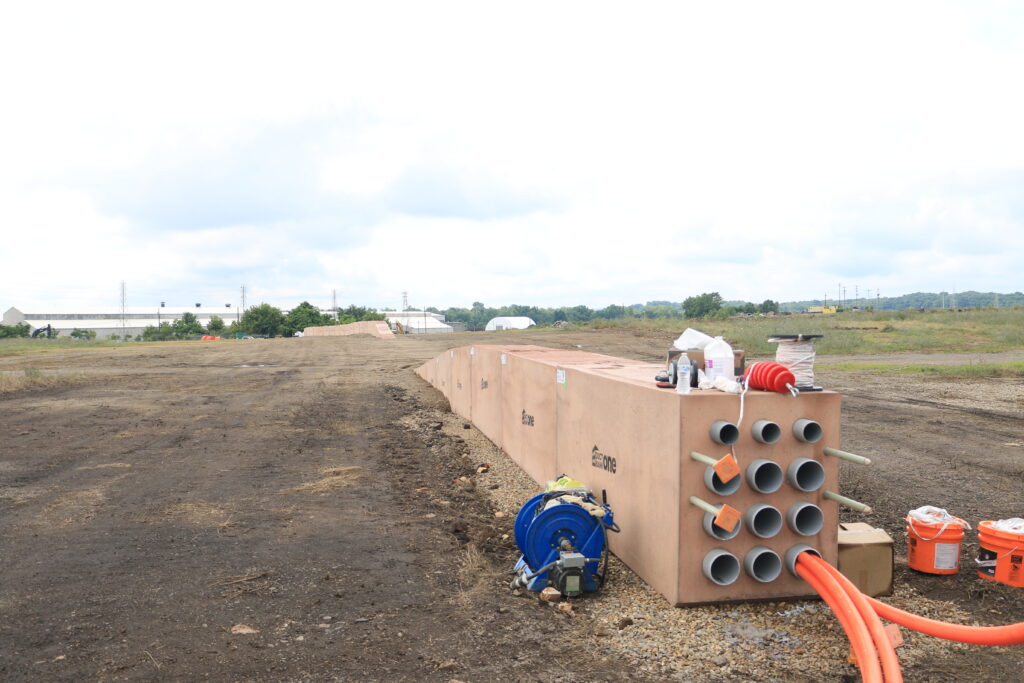
You can mix conduit sizes in a single precast section — 2-inch next to 8-inch, 4-inch next to 6-inch, whatever the cable schedule requires. The same bank can be configured multiple ways across different runs on the same job.
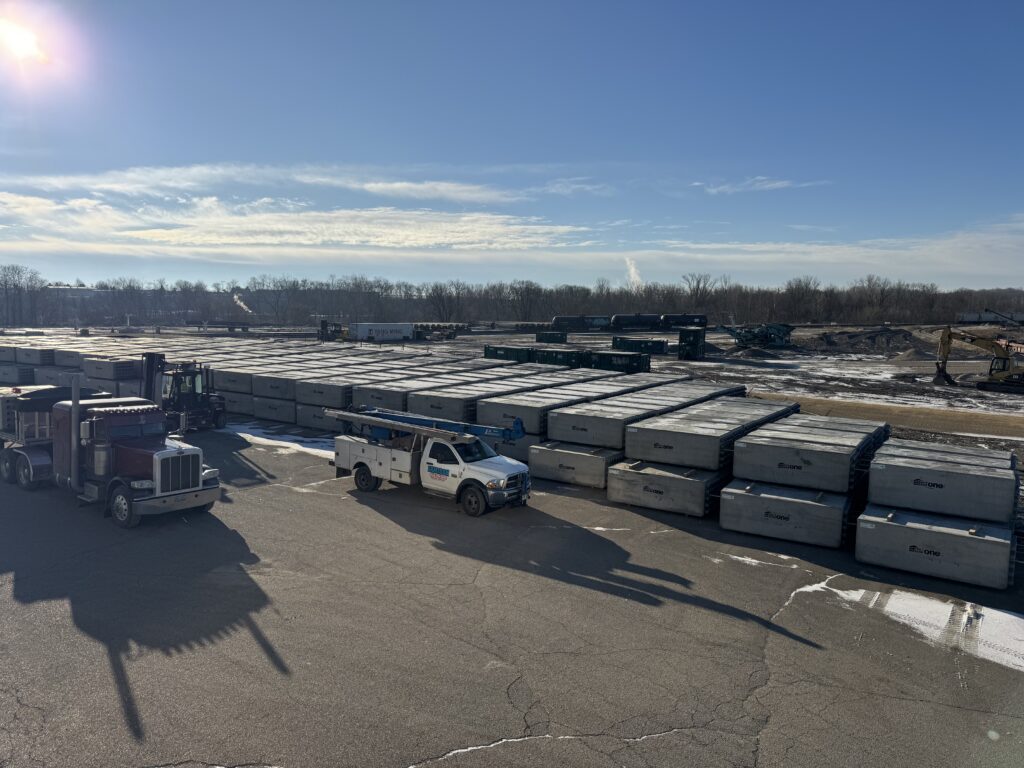
DBO operates over 1,200 forms dedicated entirely to duct banks. When a project needs a custom configuration, there’s a form for it. A general precaster running three or four standard sizes can’t say the same.
Offsets and Transitions
Offsets are where a lot of precast jobs slow down unnecessarily. They don’t have to.
The common scenario: an eight-way run splits at two vaults that are offset from each other. The vaults are never perfectly aligned — and they never will be. Trying to manufacture a precast angle to hit an exact field coordinate is a waste of time.
The efficient move: keep the precast crew running, and let a two-person cast-in-place crew handle the transition behind them.
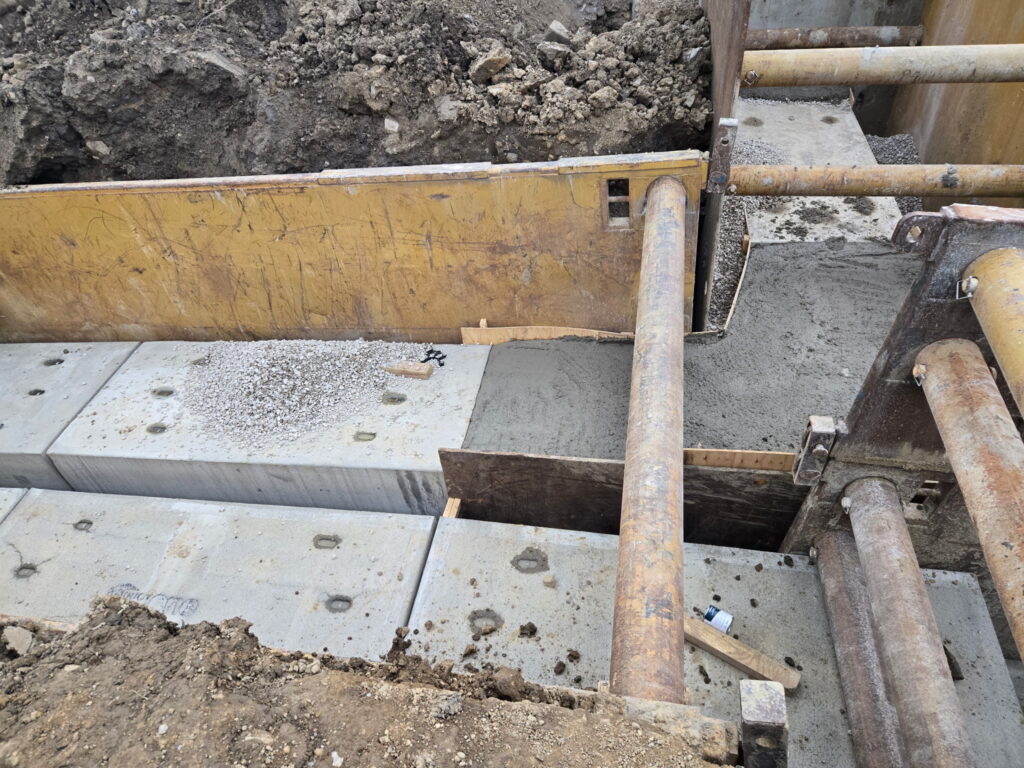
The precast sections act as forms and conduit spacers. The cast crew ties in the offset, sets plywood, and pours. No rework. No one stops to figure out who’s wrong. The main crew is 500 feet down the run before the transition is finished.
Elevation Changes: The 4-over-50 Rule
Precast handles up to 4 feet of elevation change — up, down, or side to side — over any 50-foot run. That’s an 8% grade, which covers the vast majority of sites.
Where grades exceed that — sharp breaks, dramatic drops — cast-in-place is the right call. The goal is the most efficient combination for your specific layout, not 100% precast at any cost.
Crowded Underground Utilities
When the underground is already occupied, cast-in-place creates problems precast avoids.
Field pours need over-excavation and room to form, tie, and pour. On a tight corridor — active sanitary on one side, storm line on the other — there’s no room for that without disturbing what’s already there.
Precast sections drop in. No over-excavation. No wet concrete. No risk to adjacent utilities.
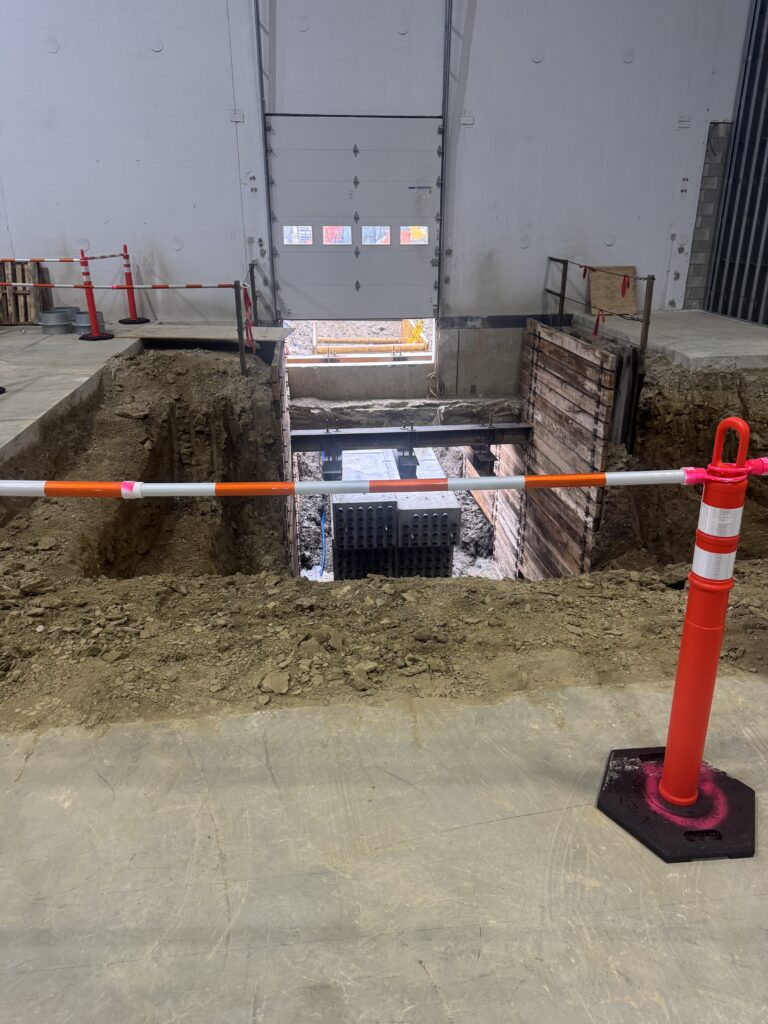
The section lands, dowel pins align it, trench closes. The utilities on either side never see a vibrating concrete pour or extended trench exposure.
Bring Us Your Drawings
Custom configurations don’t add lead time. DBO’s engineering team works from your conduit schedule, section view, and elevation profile and returns stamped calcs in 10–14 days.
If your job has unusual geometry, bring it to engineering early. We’ll confirm what runs precast, where transitions fall, and how to keep the crew moving. Talk to our engineering team or request a quote to get started.