
On design-build projects, the scope rarely stops moving at 60% plans. Routes shift around unsuitable soils. Technology changes redraw conduit configurations. The owner adds a run. The underground layout flips orientation mid-phase. That’s not a failure of planning, that’s how these jobs work.
The concern most GCs and ECs raise is fair: if we commit to precast early, are we locked in?
The short answer: with DBO, no. And in most cases, a field change is easier to execute with precast than it is with cast-in-place.
The Real Source of the “Precast Is Inflexible” Misconception
The concern is real, just misattributed. Some precast manufacturers have to bulk-produce everything months ahead of the job. If you’re pouring 10 sections a day with 10 molds, you need a three-month head start to build inventory. That means the whole job is cast before the first trench opens. A mid-job design change at that point? You’ve already built product you can’t use.
That’s not how DBO operates.
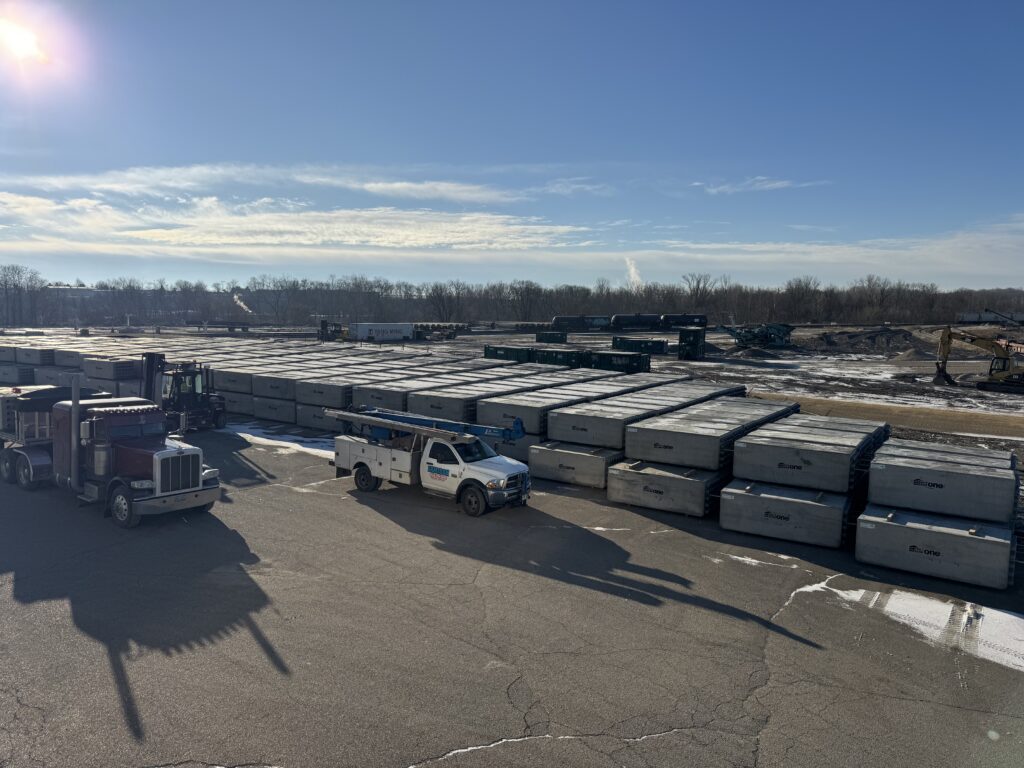
DBO runs 320 sections per day across dedicated form lines. We pull from stockpile as the job progresses — not a pre-built inventory sitting in a yard for six months. If the section view changes mid-job, we change our tooling. A form changeover costs orders of percent of the total job. It’s a rounding error, not a change order crisis.
If a 10-way bank flips from vertical to horizontal orientation halfway through design, we modify the tooling in the shop and adjust the section view detail. At the pace most jobs consume product, we’re six days behind on production — not six weeks.
Adding Conduit After the Fact Is Actually Faster with Precast
Here’s the part most people don’t know until they’ve been through it. Cast-in-place duct banks are poured in a trench. The edges aren’t flat — they follow the soil, the form boards, the variations in bedding. When you need to add conduit alongside an existing run, you’re working against an irregular surface. Your new form has to account for that. Precast sections have flat, square edges. Always.
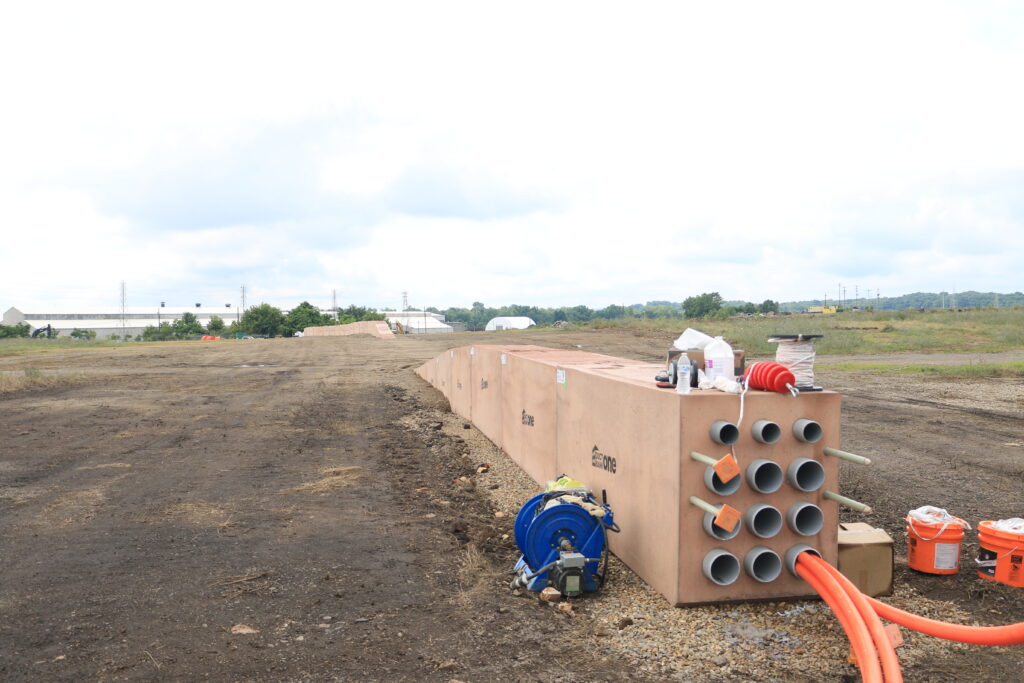
When you need to add two conduit to a DBO duct bank run, you butt the new section against the existing one — and you already have your formed wall. The flat surface does what formwork would have done in a CIP scenario, except it’s already there and already cured. The addition is faster, not harder.
The same logic applies to adding conduit above or below. Clean top surfaces mean stacking sections or running additional conduit on top of a finished run is a straightforward geometry problem — not a field-improvised concrete pour.
What Changes Actually Cost
The cost difference between a scope change in cast-in-place and precast isn’t what most people assume.
Either way, you’re dealing with:
- Conduit adds or deducts (same material cost either way)
- Modified forming or tooling (form changeover for precast; rebuilt formwork for CIP)
- Installation labor adjustments
The tooling changeover at DBO is the only DBO-specific cost — and it’s minimal relative to total job value. You’re not throwing away a field form you already built. You’re not paying for a pour that needs to be demolished. You’re adjusting a mold in a controlled shop environment.
The bigger cost difference is in what doesn’t happen with precast: no open trench extended for rework, no concrete trucks re-mobilized, no poured surface that has to be broken out and re-encased.
How DBO Handles a Mid-Job Configuration Change
The process is direct:
- Design change is identified — new conduit count, different section orientation, route deviation
- DBO engineering adjusts the section view and tooling in the shop
- Production shifts to the updated configuration
- Because we pull from stockpile and don’t pre-build the full job, catch-up is measured in days — not weeks
- Modified sections are sequenced into delivery to align with trench progress
No job shutdown. No emergency meeting with the batch plant. No crew sitting idle while revised forms are built.
The trench doesn’t know the difference — and the schedule barely does either.
Why Design-Build Projects Are Where Precast Wins
Data center builds, in particular, are moving fast. Technology changes. The layout shifts. Unsuitable soils show up three feet below where the survey said they wouldn’t. Prefab mandates from owners create pressure to commit to precast early — but the fear of locking in prematurely keeps some GCs hedging toward CIP, where changes feel more manageable.
The flexibility advantage actually runs the other way. Precast with production capacity means you can commit early, change mid-stream, and install predictably — because the manufacturer adjusts to the job, not the other way around.
That’s schedule insurance in the most practical sense: the ability to absorb the changes that are going to happen anyway without blowing the critical path.
If Your Next Design-Build Has a Moving Duct Bank Scope, Talk to Engineering Early
The earlier DBO engineering gets involved, the easier it is to handle design evolution without cost surprises. We can overlap submittals with early fabrication, keep production sequenced to your trench progress, and adjust tooling between phases without disrupting delivery.
Design-build doesn’t have to mean duct bank risk. It just means bringing the manufacturer in before the plans are final — not after.