
If Weather or Soil Is Slowing Your Cast-in-Place Pour, Precast Is an Option
Cast-in-place duct banks fail every time conditions turn. Rain floods the trench. Cold kills the pour. Heat pushes crews to off-hours. Unstable soil resets the whole sequence. If that’s what’s happening on your job right now, precast duct banks solve it — they install regardless of weather, handle ±4 feet of deviation over 50 feet of run, and a 5-person crew closes trenches the same day they open. If weather or soil is what’s costing you days, odds are high we can help you get the schedule back.
If You’re Reading This, You’re Probably Losing Days
You came here looking for a solution. Something on your site isn’t cooperating — the forecast, the soil, the groundwater, the temperature, the trench that keeps filling up — and the duct bank scope is dragging the rest of the schedule with it. You’re not alone, and you’re not doing anything wrong. Cast-in-place duct bank installation is simply dependent on conditions that regularly fail.
The good news: there’s a way to take weather and soil out of the equation entirely.
Why Duct Bank Schedules Keep Slipping
Every active site eventually runs into the same recurring issue. Rain, groundwater, and unstable soils destroy trench conditions. Cold snaps halt concrete pours. Heat forces off-hour pours with cost premiums attached. Trenches sit open for days or weeks — driving safety risk, rework, and site congestion.
The downstream impact isn’t the trench itself. It’s everything the trench blocks. Critical-path activities slip. Trades stack up idle at the gate. Delivery timelines get missed. Labor and rework costs escalate every day the hole stays open.
Across every region and every season, this is one of the most consistent sources of schedule risk on active jobsites.
Why Cast-in-Place Fails in Adverse Conditions
Cast-in-place duct banks depend on a chain of conditions that regularly breaks: dry and stable trench conditions, favorable ambient temperatures, and multi-day sequencing from forming to tying conduit to pouring, curing, and backfilling. That chain only works when the weather forecast holds and crews stay available across the full window.
One disruption resets everything. Rain floods the trench mid-install. Soil shifts or the sidewall collapses. Temperatures drift out of pour thresholds — too cold in winter, too hot in summer. Crews can’t safely enter the excavation. Dewatering, rework, and re-sequencing push the schedule back by days — and that’s before the downstream cascade hits the rest of the critical path.
No region is immune. Coastal sites deal with groundwater and storms. Northern climates lose winter months to cold-weather pour restrictions. Southern and desert sites burn crews and budgets on heat mitigation. Humid regions contend with prolonged wet seasons. Every geography has its own version of the same problem.
The Precast Solution: Install Regardless of Conditions
Precast removes weather and soil from the install equation entirely.
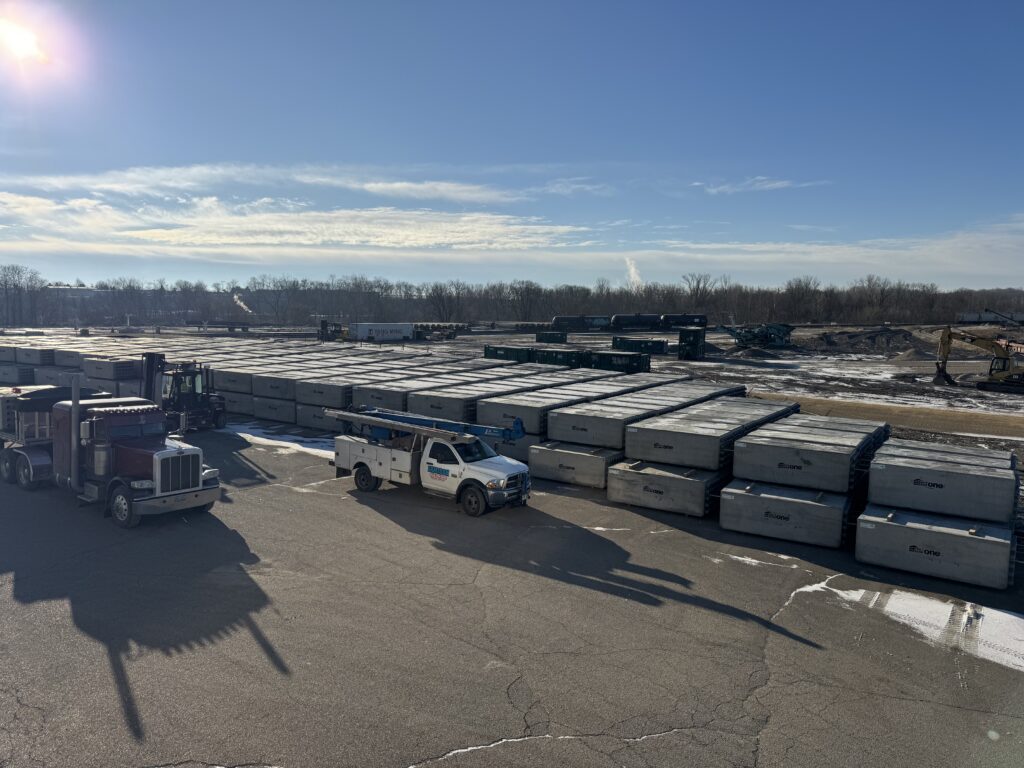
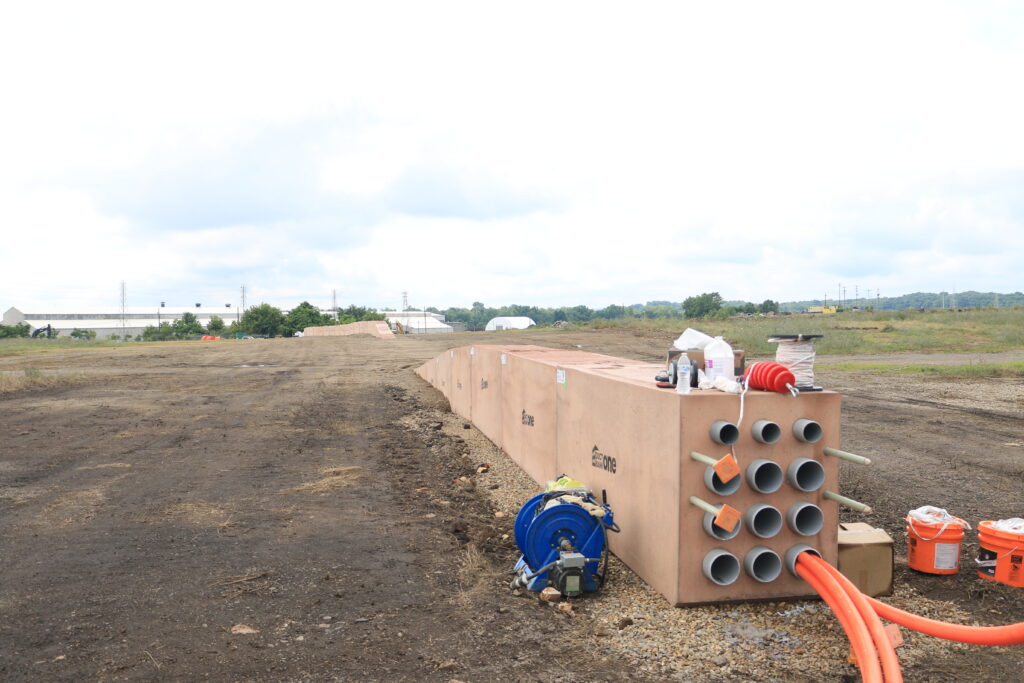
Sections are manufactured in a controlled plant environment — consistent tolerances, consistent strength, every time. They arrive on site ready to set. No forming, no tying, no pour window, no cure time, no extended trench exposure. Precast installs have continued through heavy rain events of 1.5 inches in a day without delay. It installs in freezing temperatures, in summer heat, and through active wet seasons. No heat blankets. No cold-weather pour logistics. No dewatering holdups. No off-hour pours. The work continues in conditions that would shut down a cast-in-place crew.
Precast Isn’t Just for Perfect Sites
One of the biggest misconceptions about precast is that it only works in perfect, flat, straight runs. That’s false — and it’s worth correcting directly, because it’s the reason a lot of projects default to cast-in-place when they shouldn’t.
Precast duct banks can deviate roughly 4 feet over 50 feet of lay length. Elevation can adjust gradually — about 3 inches every 10-foot section. In the field, that means precast routes around poor soils, existing utilities, and unexpected subsurface obstructions without triggering constant field rework or RFI cycles. The ground doesn’t have to be perfect. The ground can be what it is, and the duct bank adapts.
That flexibility is the whole point. Precast handles the conditions that break cast-in-place.
What This Does to Your Schedule
This is what it comes down to: precast converts an unpredictable scope into a controlled timeline.
Traditional installation means weeks of trench exposure, weather-dependent sequencing, multiple trades waiting on pour and cure windows, and a labor-heavy footprint of 10 to 15 workers per install. Precast compresses that to dig, set, and backfill in the same day. Thousands of feet of duct bank installed with a 5-person crew. Entire runs completed in days instead of months. The schedule becomes predictable, independent of weather, and project turnover accelerates — which translates directly into earlier delivery dates.
What This Does to Your Safety Numbers
Fewer workers in the trench, for less time, equals dramatically lower risk. Precast reduces the in-trench worker count by roughly 80%. Exposure duration drops. Same-day backfill closes the hazard before the site changes underneath it. Fall risk, collapse risk, and site-logistics conflict all compress.
This matters beyond the job itself. Safety metrics directly affect contractor reputation and long-term owner relationships, where one recordable incident can jeopardize the next project award. Safety performance is a portfolio-level lever, not a project-level one.
Data Center Build in Wet Soils
Consider a typical data center project: wet soils, groundwater present, a tight critical-path schedule, and high safety requirements from the owner. The specifics shift by geography and season — freeze-thaw cycles in one region, monsoon rains in another, extreme heat elsewhere — but the pattern is the same.
The traditional outcome looks predictable. Pours get delayed by conditions. Open-trench backlog grows across multiple runs. The install stays labor-heavy and requires continuous crew presence. Dewatering, pumping, heat or cold mitigation, and rework consume days. Critical-path activities downstream begin slipping.
With precast, the scenario changes. Installation continues through adverse weather. Trenches are opened and closed the same day, run by run. A 5-person crew sets thousands of feet per shift. The schedule holds — downstream trades stay unblocked. Safety exposure is reduced across the entire duration of the scope.
Expansion on an Active, Occupied Site
Now consider a different kind of project: a site expansion on an active, occupied campus. Existing underground utilities in unexpected locations. Limited lay-down space. Operations continuing around the work. A compressed schedule because every day of disruption costs the facility money.
Traditional installation compounds every one of those constraints. Open trenches block access routes on a working site. Each utility conflict triggers an RFI, a redesign, and another delay waiting on pour conditions. Crews of 10 to 15 working the trench create congestion in an already tight footprint. A weather delay doesn’t just push the duct bank — it pushes the re-opening of the affected areas of the campus.
With precast, the job fits the site instead of fighting it. The ±4-foot deviation over 50 feet handles the unexpected utilities without redesign. A 5-person crew minimizes footprint on the campus. Dig-set-backfill in the same day means access routes reopen by end of shift. Weather that would have stopped a cast-in-place crew doesn’t stop the install. The expansion stays on schedule, and the operating facility stays operating.
If Weather Is Costing You Days, Precast Is the Fix
If you’re dealing with a duct bank scope that keeps slipping because of conditions outside your control, precast is the solution built for exactly that situation. It turns the most unpredictable part of the project into a controlled, repeatable process. Weather becomes irrelevant. Soil conditions become manageable. The schedule becomes predictable. And safety improves across the board.
When the ground and the weather don’t cooperate — on your current project or the next one — precast is how the schedule stays on track.