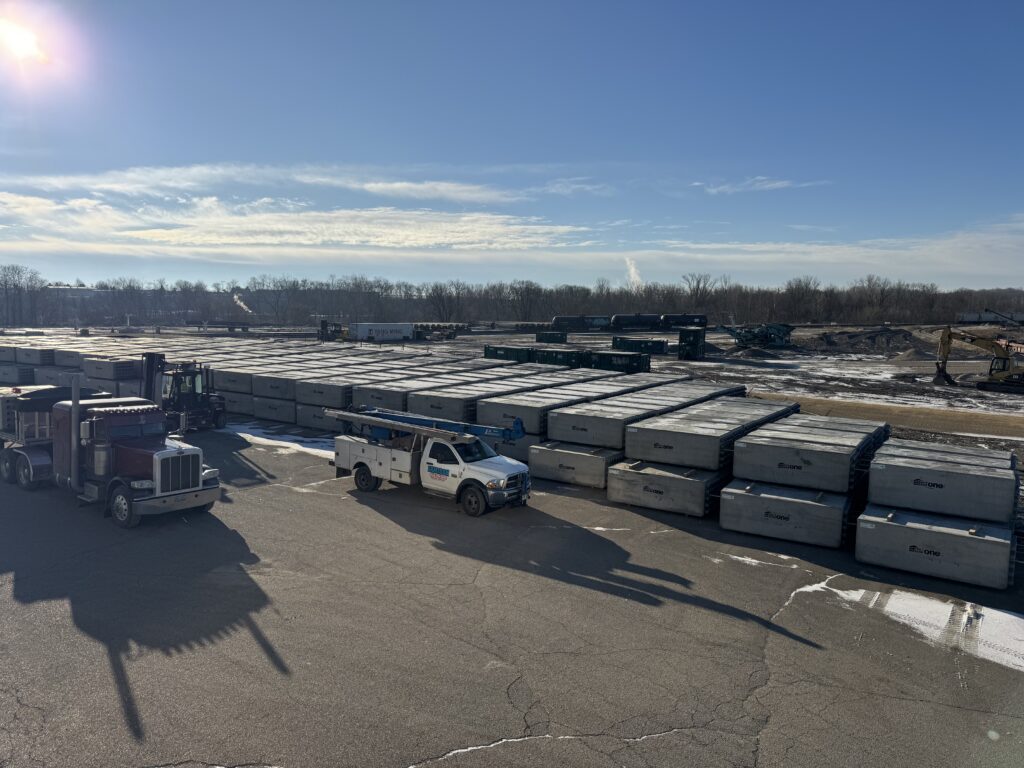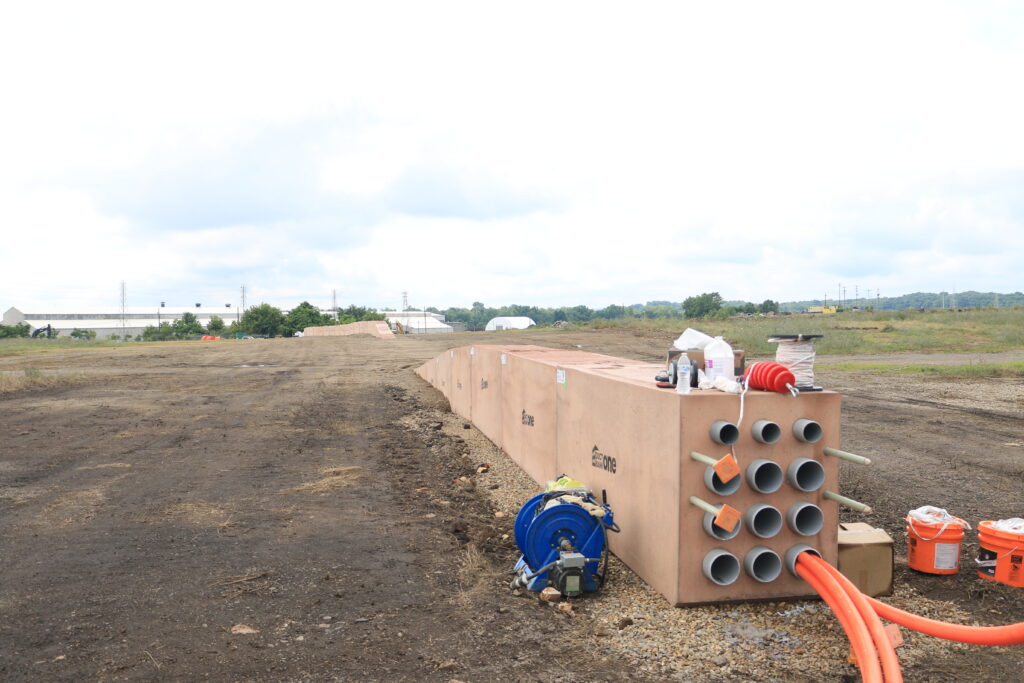

Two joint types matter on a precast duct bank: slip joints (ASTM C1903) and gasketed (watertight) joints. Slip is the right spec for nearly every project. Gasketed costs 2–3× more, and a fully sealed duct bank can float out of the ground when the water table rises.
If you only read this far: spec slip joints unless the soil or groundwater specifically requires gasketed.
At a Glance
| Slip (ASTM C1903) | Gasketed (watertight) | |
|---|---|---|
| Cost | Baseline | 2–3× standard Sch 40/80 PVC |
| Watertight? | No — keeps sediment out, lets incidental water drain | Yes — sealed |
| Buoyancy risk | None — water equalizes | Real — sealed banks have floated under high water tables |
| Where it fits | 99%+ of precast duct bank runs | Chemically aggressive soils, contaminated groundwater |
Why Slip Joints Are the Default
Slip joints aren’t watertight by design. They keep sediment out and let incidental groundwater pass through. Paired with a duct bank sloped toward a vault or manhole with a sump, any water that enters drains to where it can be managed.
That works because most medium-voltage and power cables are rated for direct burial and routine moisture exposure. The joint doesn’t need to keep water out — it needs to keep sediment out.
When Gasketed Is the Right Call
Gasketed joints are appropriate when site conditions genuinely demand it: chemically aggressive soils, groundwater carrying contaminants that could degrade cable insulation, or environmental exposures beyond what direct-burial cable is built for. In practice, that’s roughly 1 in 1,000 installations.
The Buoyancy Problem
A fully sealed duct bank is a closed air volume in wet soil. That’s a buoyancy problem.
Groundwater doesn’t stay at the level shown in pre-construction borings. Seasonal shifts and drainage changes can push the water table well above design assumptions. When that happens, a sealed duct bank or vault behaves like an empty tank underwater — it wants to float. Sealed systems have lifted out of the ground under high water tables, and the structural fix costs far more than any water ingress the seal was meant to prevent. Slip-jointed systems don’t have this failure mode.
A Side Benefit of Not Sealing
Water conducts heat better than air. A slip-jointed duct bank carrying some moisture helps dissipate cable heat — a modest but real benefit under load. Don’t factor it into ampacity calcs, but know that incidental water isn’t fighting the system. It’s quietly helping.
How to Decide
- Soil and groundwater normal? Slip joints.
- Chemically aggressive or contaminated? Evaluate gasketed.
- Drainage path to a sump-equipped vault? Slip joints work as designed.
If the answers point to slip joints, stop there. Upgrading past what the project needs adds cost without adding protection.
What DBO Delivers
DBO precast duct banks ship to ASTM C1903 slip-joint geometry as the standard, with gasketed configurations available when the site calls for it. Every section ships with stamped structural and thermal documentation. If the watertight question is still open on a project, talk to engineering before it gets locked into the submittal — a 2–3× cost premium shouldn’t get specified by default. Stamped calcs in 10–14 days. Typical lead time 4–6 weeks from order. That’s how we build.