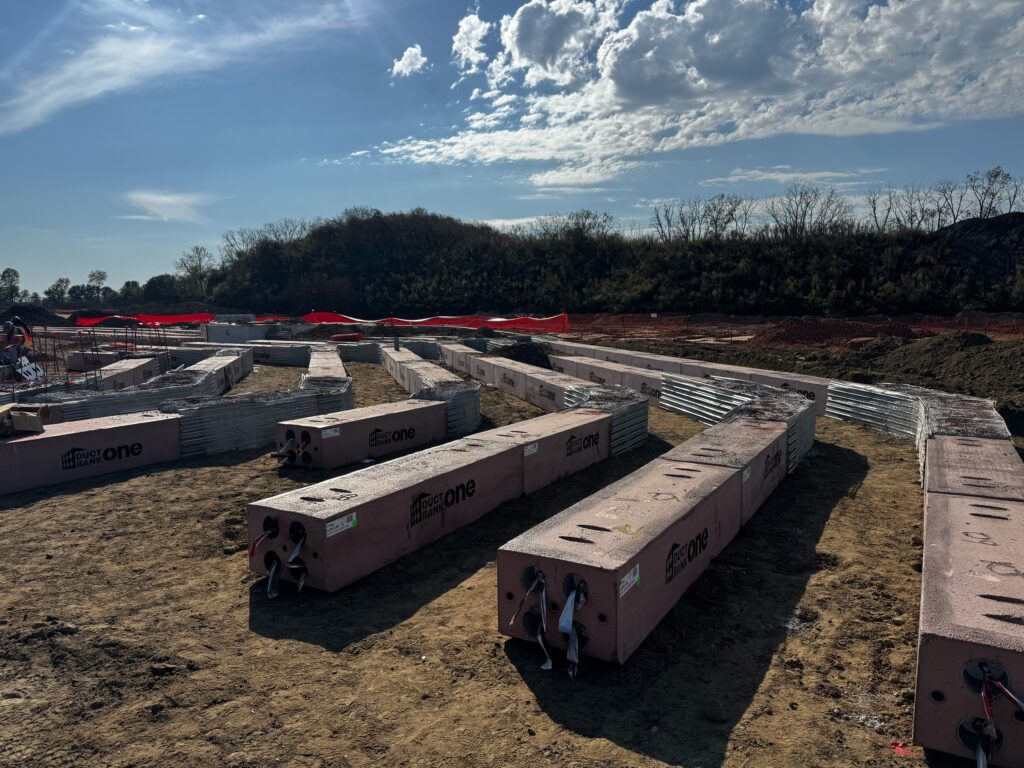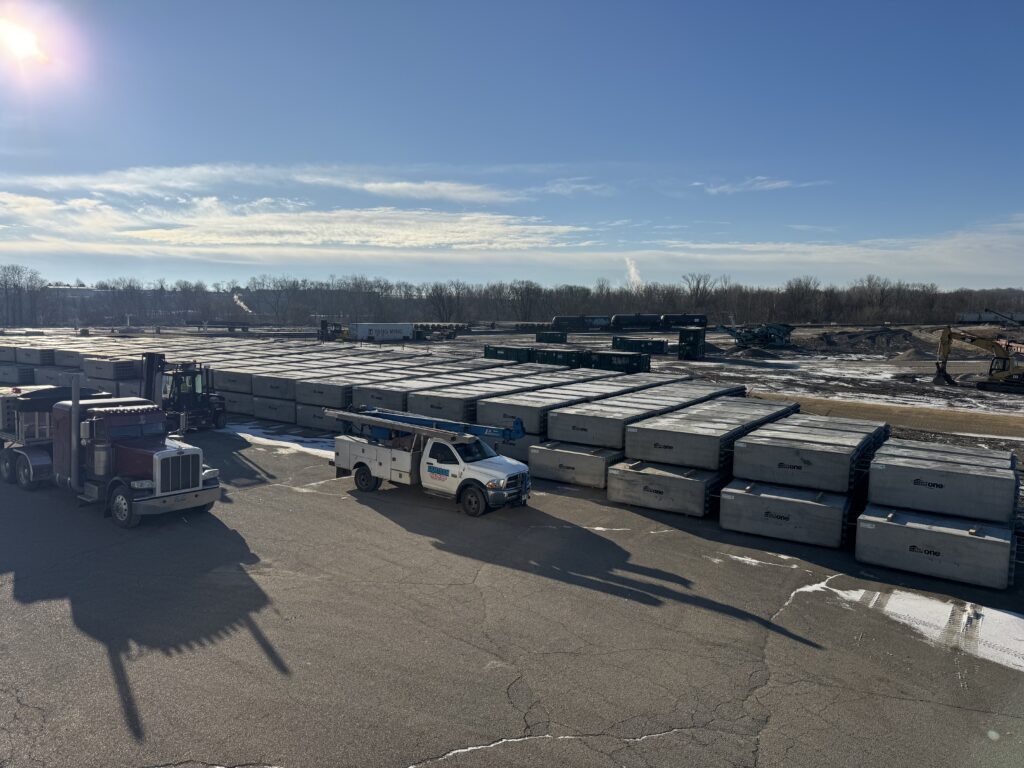

Every duct bank job has the same trench and five different scorecards.
The GC is watching the schedule. The owner is watching the energization date. The EC is watching their crew. The civil is watching their equipment. The engineer is watching the submittal. With cast-in-place, all five of them are waiting on the same thing — concrete to cure in an open trench.
Precast duct banks pay off differently depending on who’s buying. GCs get schedule control. Owners get risk off their site. ECs get their electricians back on electrical work. Civils get more use out of the excavator they already own. Engineers get factory-tested, documented sections. It’s the same product, and each of them gets a different benefit.
Side by Side: Cast-in-Place vs. Precast, by Buyer
| Buyer | What cast-in-place costs them | What precast changes | The number that matters |
|---|---|---|---|
| General Contractor | Trench open 3–5 days, crews of 8–15, schedule exposed to weather | Dig, set, and backfill the same day | 400 ft in one day vs. about 6 days with cast-in-place |
| Owner | Weather and cure-time risk sit on your site until the last pour cures | Sections show up cured and inspected — the risk stays at our plant | 4–6 week lead time; 5,100 LF of section per day |
| Electrical Contractor | Electricians tied up in the trench while concrete cures | Crews move to terminations, gear, and commissioning | Same-day trench closure; 5–15 minute sets |
| Civil Contractor | Excavator waits while crews form and pour | The same excavator digs and sets | 250–600 LF/day; bid efficiency in the first week |
| Engineer | Field pours depend on weather, cure conditions, and on-site testing | Factory-cured sections with stamped documentation | 55 rho oven-dry; designed and tested to more than 25% above HL-93 |
Install rates, crew sizes, set times, and trench times vary with depth of install and crew experience.
What Does a GC Get From Precast?
Schedule stability. The duct bank is one line item. The schedule that depends on it is everything that comes after it.
When the underground runs late, switchgear, paving, and every trade behind it run late too. Precast takes the most weather-exposed, labor-heavy piece of site work and turns it into a predictable install — 400 feet that takes about six days with cast-in-place goes in with us in one. On a data center campus, a clean phase one is how you earn phase two.
For a GC, precast is schedule insurance.
What Does an Owner Get From Precast?
Less risk sitting on your site. With cast-in-place, the weather and cure-time risk stays in your trench until the last pour cures — no matter how good the crew is.
With precast, that risk moves to our plant. Sections are cast, cured, and inspected before they ever ship. Lead time runs 4–6 weeks, and our plant produces 5,100 linear feet of duct bank section per day.
You’re buying a finished product, not carrying the weather and cure-time risk on your site.
What Does an Electrical Contractor Get From Precast?
More done with the crew you already have. The first question we hear from ECs is a fair one: if it’s built off-site, what’s left for us? Here’s the answer: we don’t install. We manufacture.
Your electricians are your most skilled, hardest-to-replace people. Every hour they spend in the trench waiting on a pour is an hour they’re not on terminations, gear, and commissioning — the work only they can do.
Take the electricians out of the trench and get them wiring again. Precast doesn’t take work away from electrical contractors — it takes the risk out of it.
What Does a Civil Contractor Get From Precast?
More use out of the excavator you already own. Civils set pipe, box culvert, and structures every day. A precast duct bank is one more precast structure — with electrical requirements we walk you through.
The excavator that digs the trench sets the sections. Sets run 5–15 minutes per section, and our dowel-pin joint (patent pending) lands each piece within 18 inches of the next and pulls it home — no hands in the joint, no pry bars. Trained crews reach bid efficiency in the first week, and you can train with us at our Canton Training Facility or on your site.
Electrical contractors remain essential for terminations, testing, and energization. Precast gives the whole team another way to keep the trench moving — it doesn’t redraw anyone’s scope.
What Does an Engineer Get From Precast?
Data you can stamp a submittal on. Engineers don’t need a sales pitch. They need thermal numbers, load ratings, and standard configurations they can drop into the drawings.
- Thermal resistivity: 55 rho oven-dry, standard mix
- Compressive strength: 4,000–10,000 psi, matched to the load case
- Load: designed and tested to carry more than 25% above HL-93
- Alignment: up to 4 ft over 50 ft (8%), horizontal or elevation
- Stamped calcs: 10 days
Engineer it. Test it. Prove it. Deliver it ready.
Who Installs It?
Whoever’s set up for the trench. We don’t install, and we don’t pick sides. An EC, a civil, or an EC with its own excavation crew gets the same product, the same training, and the same startup support on the first install.
The project team decides who sets it. We make sure it goes in right.
Where Everyone Wins: The Closed Trench
On a cast-in-place job, the trench stays open for 3–5 days with 8–15 people working in or around it. With precast, it gets dug, set, and backfilled the same day by a crew of five — and no one stands in the excavated trench.
That one change shows up on every scorecard. The GC gets the trench back. The owner loses the exposure. The EC gets their crew back on electrical work. The civil keeps the machine running. The engineer gets a documented product.
The safest trench is the one that’s closed.
What Precast Won’t Do
Precast isn’t magic. You still need to plan four to six weeks out. Tight corners and vault tie-ins may need factory bends or a closure pour. If your spec calls for thermal resistivity below 55 rho, talk to our engineering team early.
We’d rather tell you that up front than on day one of the install.
Let’s Look at Your Job
Send us your plans, and we’ll show you what precast does for your seat on the job — schedule, crew, scope, or specs.
Request a quote or talk to our engineering team.
That’s how we build.