
Winter Is When Cast-in-Place Duct Banks Stall
It’s January in Bismarck, North Dakota. Frost runs four feet into the ground. The duct bank still has to go in — and every cast-in-place pour now needs heaters, blankets, and days of protected cure before anyone can backfill.
That’s how a winter duct bank becomes a spring duct bank.
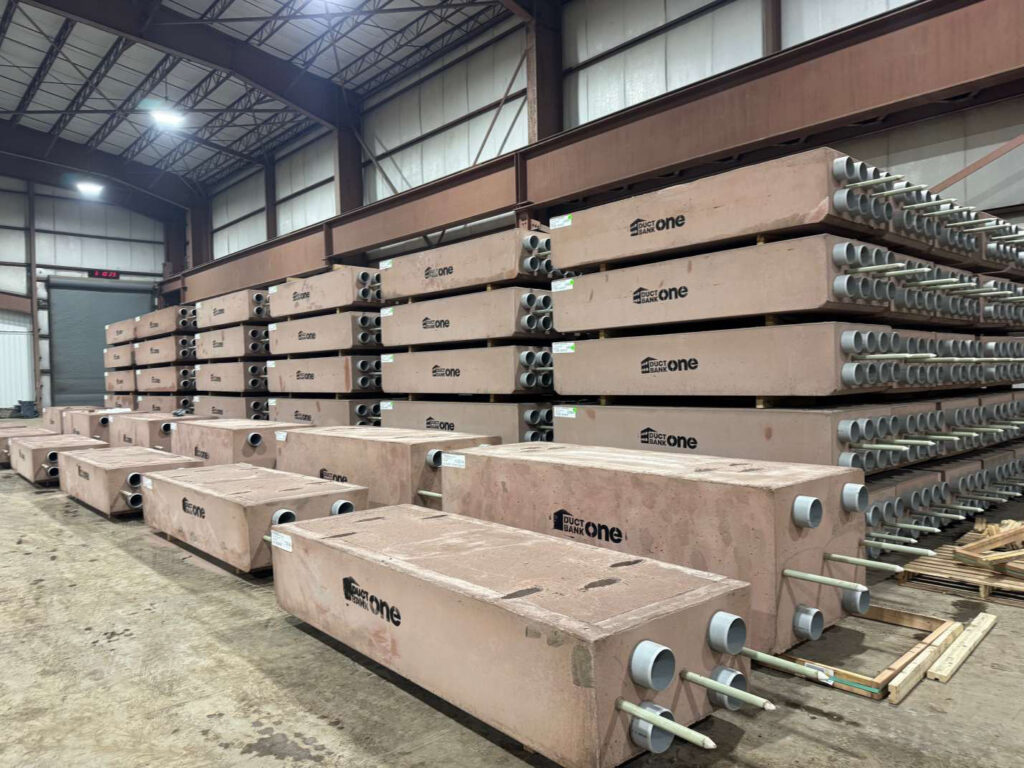
The Short Answer: Set precast. The sections are cast and cured in the plant, so there’s no pour to protect, no cure to wait out, and no temporary heat on site. A 5-person crew digs, sets, and backfills the same day — 250–600 LF per day, depending on depth of install and crew experience.
Cold-Weather Duct Bank Install: Precast vs. Cast-in-Place
| Precast (DBO) | Cast-in-place | |
|---|---|---|
| Concrete cure | Done in the plant before delivery | In the trench — protected from freezing until it reaches 500 psi (ACI 306) |
| Temporary heat, blankets, enclosures | Not needed | Required whenever air temps fall to 40°F or below during protection |
| Trench open time | Same day | 3–5 days* |
| Install rate | 250–600 LF/day* | 20–120 LF/day* |
| Crew size | 5, including the excavator operator | 8–10 on a 6-way; 10–15 on a 30-way* |
| People in the excavated trench | None | Full crew forming, tying, and pouring |
| 400 ft of run | 1 day | About 6 days — before weather adds anything |
*Depending on depth of install and crew experience.
Why Does Cast-in-Place Duct Bank Stall in Winter?
Cold weather attacks the cure. Under ACI 306, cold-weather concreting applies once air temperature falls — or is expected to fall — to 40°F or below during the protection period. Fresh concrete has to be kept from freezing until it reaches 500 psi, which takes about two days for concrete held at 50°F (NIH Office of Research Facilities, citing ACI).
On a duct bank, that means temporary heat, heating blankets, and multi-day curing above freezing — on every pour, in an open trench. Every cold day adds equipment, labor, and trench time to a scope that was already on the critical path.
What Does a Winter Slip Cost the GC?
The heater rental is the small number. The big one is the schedule.
On hyperscale data center work, GCs are judged on schedule security, schedule stability, and safety. A duct bank that slips can cost a contractor its place on the program — and a clean first phase is how you win the next building. Meanwhile, a 400-foot cast-in-place trench sits open for days through freeze-thaw cycles, with a full crew working inside it.
The real cost of a winter pour isn’t the heat. It’s the next phase you don’t get.
How Does Precast Keep a Winter Duct Bank on Schedule?
Precast skips the step the cold attacks. Sections arrive already cured, at 4,000–10,000 psi matched to the load case. Nothing on site needs to stay above freezing.
The install runs like this:
- The excavator digs a short stretch of trench.
- The same operator sets 10-ft sections — 5–15 minutes per section, depending on depth and crew experience.
- The patent-pending guided dowel-pin joint pulls each piece home once it’s within 18 inches of the next one. No hands in the pinch point.
- The crew backfills behind the set as they go. Trench opens and closes the same day.
No one stands in the excavated trench. One crew member works on top of the installed piece. On frozen, icy ground, that matters — 80% fewer workers in the hazard zone, and the hole is closed before the next freeze.
Field Example — Winter Duct Bank Demand (Bismarck, North Dakota)
In Bismarck, contractors run into four feet of frozen ground in January. Cast-in-place pours there mean heating the trench, blanketing the pour, and waiting days for a cure that the weather keeps fighting.
Those contractors call DBO to get around the cure entirely. Dean’s read from the field: winter doesn’t slow demand for precast — it drives it. When cast-in-place crews start pricing heaters, precast crews keep setting pipe.
Who Should Plan a Winter Precast Install Now?
- GCs with data center or industrial phases that can’t wait for spring. Precast turns the most weather-exposed scope on the job into a predictable one.
- Site civils who already own the excavator. Your crew digs, sets, and backfills — and reaches bid efficiency in the first week.
- Electrical contractors who’d rather have their people pulling wire than standing in a heated trench. Take the electricians out of the trench and get them wiring again.
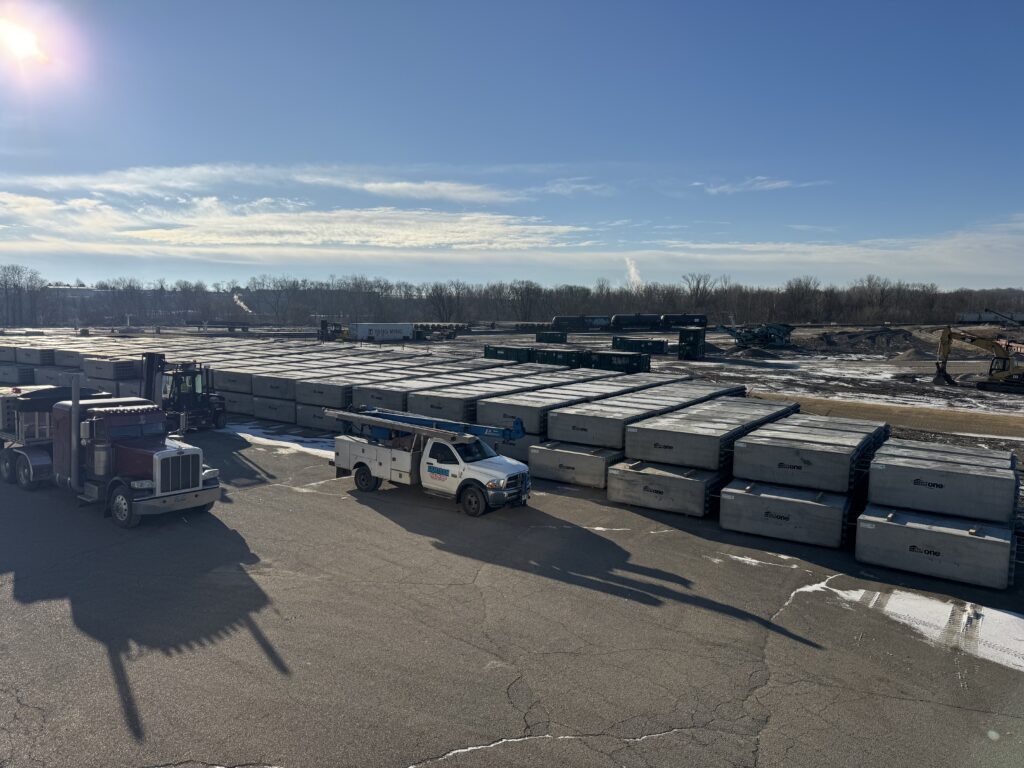
Timing works in your favor. DBO lead time runs 4–6 weeks, stamped calcs come back in 10 days, and the plant produces 5,100 LF of duct bank section per day. Order in December, and you’re setting duct bank in January — while cast-in-place crews wait on the thermometer.
Next Step
Cold doesn’t stop the schedule. The pour does.
Request a quote or talk to DBO engineering about sequencing your winter duct bank — before the frost line sets your schedule for you.